
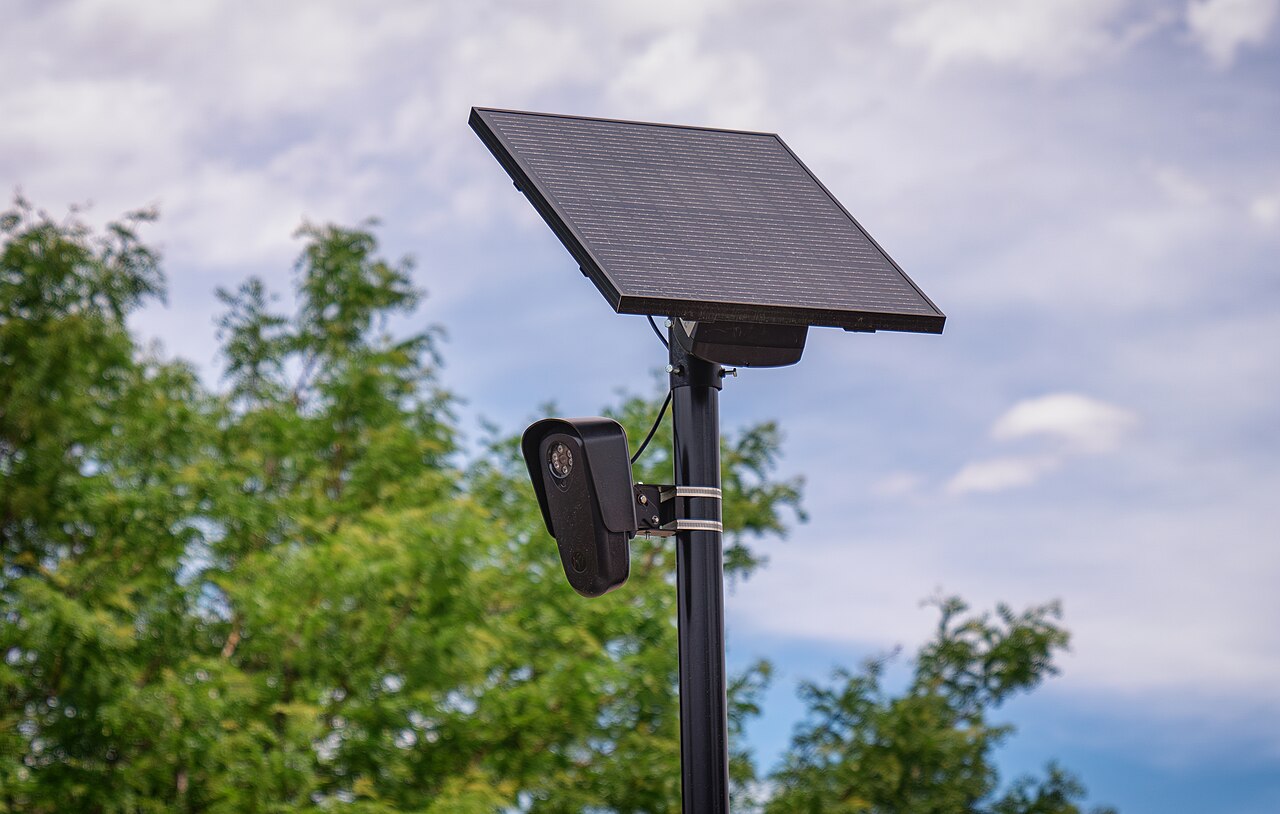
The debate over Flock cameras has reached Galion.
At a meeting of Galion City Council earlier this year, two citizens addressed council members about the automated license plate reader technology, which records identifying information from vehicles traveling past camera locations.
According to the meeting minutes, one citizen provided a detailed presentation concerning a Flock camera system that Galion City Schools planned to install on school property, along with one pole located on city property. A second citizen expressed concerns about the cameras, drawing in part on experiences his business had encountered with the same or similar technology.
The discussion placed Galion within a much larger conversation taking place across Ohio. While supporters describe Flock cameras as valuable tools for locating suspects, recovering stolen vehicles, finding missing people, and investigating serious crimes, opponents have raised concerns about privacy, data security, government oversight, and the growing ability to track the movements of ordinary citizens. That debate is no longer limited to large cities or distant parts of the state. It is unfolding in communities throughout north-central Ohio, several of them only a short drive from Galion.
A Debate Spreads Across Ohio
In Hamilton, a grassroots organization known as DeFlock Hamilton has formed in response to the city’s use of the technology. The group has focused attention on who can access camera data, how the information is used, and how much the public knows about the system. Its emergence reflects a broader concern that communities are sometimes learning about automated license plate reader networks only after cameras have already been installed.
In Ironton, legislation was introduced this week that would prohibit any government entity from using Flock cameras within the city limits. The proposal represents one of the strongest official responses to the technology in Ohio. Rather than seeking new policies or additional oversight, the legislation would prevent local government use of the cameras altogether.
Similar concerns have surfaced in Bucyrus. According to reporting published Tuesday by the Mansfield News Journal, Bucyrus Law Director Brandon Gobrecht believes Flock cameras have no place in a free society and considers them unconstitutional. That position places the issue squarely within the debate over the limits of government surveillance and whether recording vehicle movements on public roads violates constitutional protections.
Marion Considers Removing Its Cameras
The most extensive nearby debate may be taking place in Marion.
The Marion County Sheriff’s Office received approximately $70,000 from the Ohio Department of Public Safety to extend its agreement with Flock Safety through June 30, 2027. The funding covers 34 cameras installed across Marion County, including cameras located within the City of Marion. Despite that investment, the future of the cameras within the city has become the subject of an increasingly contentious City Council debate.
A council member made a motion seeking the removal of Flock cameras from within Marion’s city limits. A council committee later held the first reading of an ordinance that would ban Flock automated license plate readers following hours of public comment. Supporters of the cameras, including law enforcement officials and several council members, pointed to cases in which the technology had helped solve violent crimes. They also cited the recent recovery of a missing child as evidence that the system can provide meaningful public-safety benefits. Opponents urged the city to take a more cautious approach.
Residents and technical experts raised concerns about reported cases of police officers misusing similar systems in other jurisdictions, the possibility of computer systems being hacked, and the potential for the technology to expand well beyond its original purpose. Of particular concern was what critics describe as capability creep. Cameras initially installed to identify stolen vehicles or assist in major criminal investigations could eventually be paired with more advanced artificial intelligence, expanded databases, and increasingly detailed lists of vehicles or individuals being monitored.
For opponents, the issue is not limited to how the cameras are being used today. It also involves how they could be used in the future.
Networks Already Operate Nearby
Automated license plate reader systems are already firmly established in the Mansfield and Richland County area. The Mansfield Police Department operates approximately 24 to 29 Flock Safety cameras, with the exact number varying among publicly available reports. Much of the system has been financed through state grant funding. The cameras form part of a wider network of automated license plate readers used by law enforcement agencies to identify vehicles connected with criminal investigations, stolen vehicle reports, missing-person cases, and other alerts.
The Richland County Sheriff’s Office expanded its own program in 2025 and now operates 16 cameras across the county, according to Richland Source.
Together, the Mansfield and Richland County systems demonstrate how quickly Flock networks can grow once agencies begin receiving state assistance for their installation and continued operation.
Mount Vernon Draws a Crowd
The issue also returned to public view this week in Mount Vernon, where a large crowd attended a City Council meeting devoted to discussion of Flock cameras according to several local media. Residents packed the council chambers as supporters and opponents presented their views. As in Marion, the Mount Vernon debate included competing concerns that have become common wherever the cameras are discussed. Law enforcement officials and supporters emphasized the technology’s usefulness in criminal investigations, while critics questioned the scope of data collection and the protections surrounding information gathered from people who are not suspected of committing crimes.
The turnout demonstrated the level of interest the technology can generate once residents become aware that vehicle information is being collected in their community.
The Local Angle
Galion has not experienced the extended public hearings, proposed bans, or organized opposition seen in some other Ohio cities. The February City Council comments, however, show that the issue has arrived.
The circumstances here are somewhat different from those in Mansfield, Marion, or Mount Vernon. The local discussion described in the council minutes involved a system planned by the school district, including one pole situated on city property, rather than a large network announced by a police department or county sheriff. Even so, the concerns raised elsewhere in Ohio provide context for the local conversation.
Flock cameras are promoted as public-safety tools, and law enforcement agencies have credited them with helping solve serious crimes and locate missing people. At the same time, critics see the systems as part of a rapidly expanding surveillance network that can collect and share information about thousands of motorists who have no connection to criminal activity.
Those competing views are now being tested in council chambers across Ohio. For Galion, the Feb. 24 discussion may have been only an early indication of what is likely to become a continuing local issue. As nearby communities debate bans, removals, expanded networks, and tighter limits, the conversation over Flock cameras has moved much closer to home.
Image: Creative Commons License