
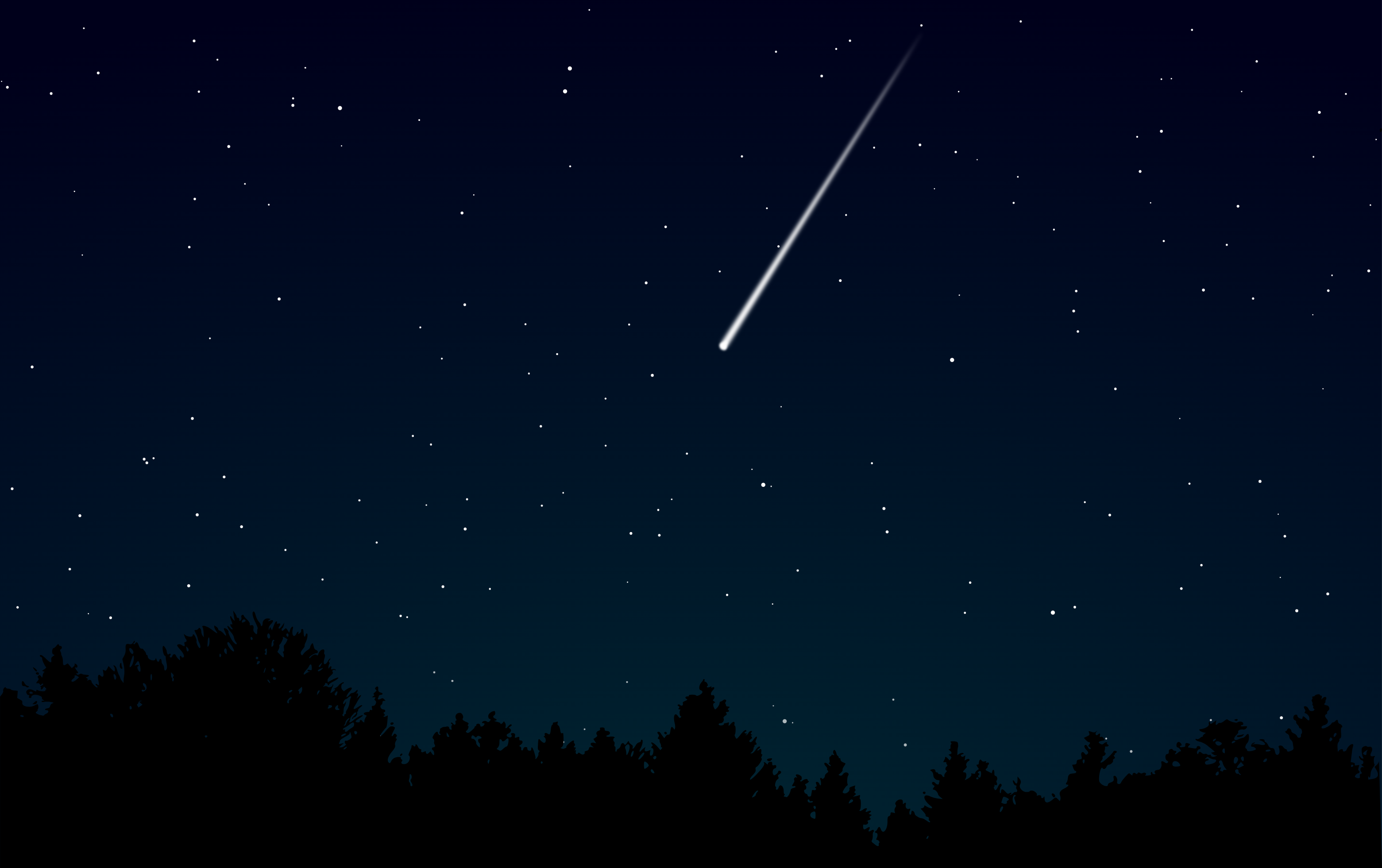
For several weeks each summer, Earth crosses a trail of ancient debris left behind by a comet. Most of the particles are no larger than grains of sand. Yet when they strike the atmosphere at tremendous speed, they produce bright streaks that can flash across much of the night sky.
The result is the Perseid meteor shower, and Galion will have a particularly good seat for the 2026 performance.
This year’s shower will be active from July 17 through August 24, reaching its height during the night of August 12 into the early morning of August 13. The timing coincides with a new moon, leaving the sky free of the bright lunar glare that can wash out fainter meteors. Under dark rural skies near the peak, observers may see dozens of meteors per hour, although actual totals depend on cloud cover, light pollution and viewing conditions.
A Show That Comes To Galion
There is nothing location-specific about the Perseids that places Galion at a disadvantage. The shower favors the Northern Hemisphere, and anyone with a reasonably dark, clear sky can watch.
Some meteors may be visible before midnight, but the best viewing generally comes between midnight and dawn. For local observers, the most promising window should be roughly 2:00 to 4:00 AM on August 13, when the constellation Perseus is higher in the northeastern sky and Galion is turned more directly into the incoming stream of particles. The meteors appear to radiate from Perseus, which gives the shower its name, but viewers should not concentrate on that single point. Perseids can appear anywhere overhead, sometimes crossing a large portion of the sky. A reclining chair facing generally northeast, with a wide view above and to either side, should work well.
The Perseids are known for fast, bright meteors that sometimes leave glowing trails behind them. The shower also produces occasional fireballs, larger and brighter flashes that can remain visible longer than an ordinary meteor streak.
Finding Darkness Close To Home
Galion does not have an official dark-sky park. A successful viewing night does not require a long trip, however. A backyard can work if nearby porch lights, streetlights and illuminated windows can be blocked. Turning off exterior lights and sitting where a house, garage or row of trees shields the brightest neighborhood lighting may reveal more than expected. Better conditions can usually be found several miles outside town. Rural roads north and east of Galion, including areas toward North Bloomfield, Polk Township and Jefferson Township, as well as western Richland County, offer broad views across farm fields and considerably less skyglow.
The location should be chosen carefully and preferably scouted during daylight. Look for legal parking completely off the pavement, an open overhead view and no bright house, industrial or intersection lights nearby. Remain on public property unless permission has been obtained, and avoid narrow shoulders, field entrances and other places where a parked vehicle could create a hazard. The rural portions of Crawford and Morrow counties can also provide darker skies, but distance alone is not enough. One bright security light directly in a viewer’s line of sight can do more damage than the distant glow of an entire town.
Leave The Telescope At Home
Meteor watching may be one of astronomy’s simplest activities. No telescope, binoculars or specialized knowledge is required. In fact, magnification makes the experience worse by narrowing the amount of sky in view. Bring a reclining lawn chair or lounger, dress for cooler predawn temperatures and allow at least 20 to 30 minutes for your eyes to adjust. Plan to remain outside for an hour. Meteors often come unevenly, with several appearing close together followed by a quiet period. Phones, flashlights and vehicle lights should be kept off once viewing begins. A brief look at a bright screen can erase much of the night vision that took half an hour to develop. A dim red light is the better option when illumination is necessary. The easiest Galion setup may also be the best: a familiar rural location, safe parking, a reclining chair beside the vehicle and an uninterrupted hour beneath the northeastern sky.
Dust Traveling At 133,000 Miles Per Hour
The Perseids begin with Comet 109P/Swift-Tuttle, which takes approximately 133 years to complete one orbit around the sun. Each time the comet passes through the inner solar system, it leaves dust and small fragments scattered along its path.
Earth crosses that trail every summer. When the particles enter the atmosphere, they are traveling at approximately 37 miles per second, or more than 133,000 miles per hour. They rapidly heat the surrounding air, producing the streaks of light commonly called shooting stars. The particles are not stars, and most never reach the ground. What viewers see is their brief, brilliant destruction high above the landscape.
Turning It Into A Road Trip
Those interested in a dedicated astronomy outing have several Ohio options. The John Glenn Astronomy Park in the Hocking Hills was designed for public observing and astrophotography beneath some of the state’s darker skies. The park welcomes visitors with cameras and telescopes on clear nights, although hours and scheduled programs should be checked before traveling. Observatory Park in Geauga County is an internationally recognized Dark Sky Park and regularly hosts public astronomy programs and overnight viewing events. Other darker destinations around Ohio include Burr Oak State Park, Lake Hope State Park and portions of Wayne National Forest.
For most Galion residents, however, the finest view may be much closer: beyond the last streetlight, beside an open field, with a dark sky overhead and enough patience to wait for the first streak of light.
Image by Ahmet Yüksek from Pixabay